
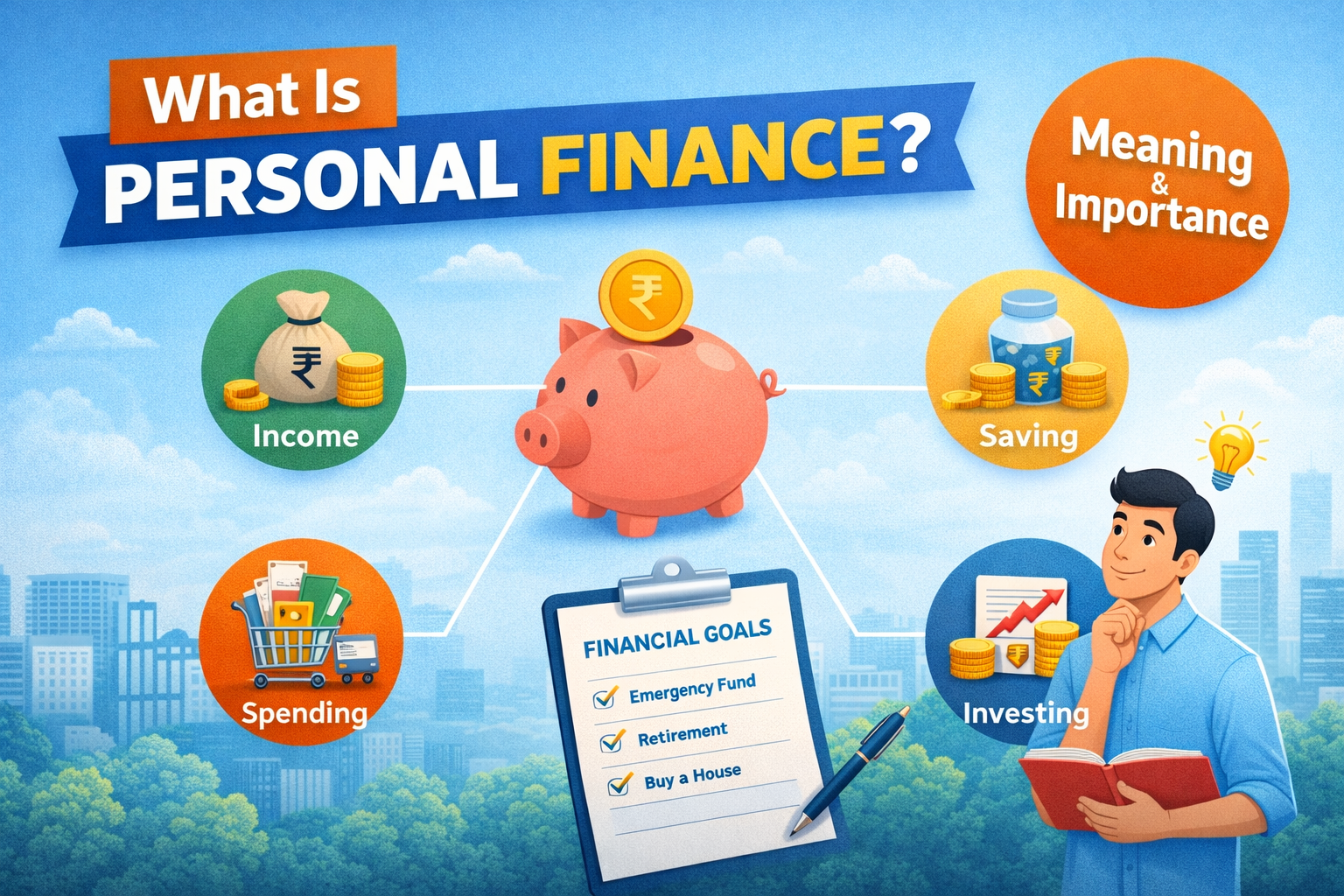
Personal finance plays a crucial role in everyone’s life, whether you are a student, a working professional, or nearing retirement. From the moment you start earning, you are faced with regular expenses such as rent, food, utility bills, travel, and lifestyle spending. At the same time, you also have future responsibilities like buying a home, funding children’s education, planning a wedding, or preparing for retirement.
Managing money without a plan can lead to stress, debt, and financial insecurity. This is where personal finance becomes important. It helps you organize your income, control expenses, save regularly, and invest wisely so that your present needs and future goals are both taken care of.
Index
- What Is Personal Finance?
- Why Personal Finance Matters Today
- Personal Finance in Simple Terms
- Key Areas of Personal Finance
- Importance of Personal Finance
- How Personal Finance Impacts Long-Term Life
- How Personal Finance Helps an Individual
- Getting Started With Personal Finance
- Conclusion: Why Personal Finance Is Essential
What Is Personal Finance?
Personal finance refers to the management of an individual’s or family’s money. It involves planning how income is earned, spent, saved, invested, and protected over time to achieve financial goals.
In simple terms, personal finance answers three basic questions:
- How much money do you earn?
- How do you spend and save it?
- How do you grow and protect it for the future?
Personal finance covers activities such as:
- Creating a budget
- Tracking expenses
- Saving for short-term and long-term goals
- Investing money to grow wealth
- Managing loans and credit
- Planning for emergencies and retirement
The purpose of personal finance is not to stop spending, but to spend smartly while staying financially secure.
Why Personal Finance Matters Today
In today’s world, the cost of living is rising steadily. Expenses related to housing, healthcare, education, and daily needs are increasing faster than incomes for many people. At the same time, easy access to credit cards and loans makes overspending and debt more common.
Without proper financial planning:
- Savings remain low
- Debt can increase quickly
- Emergencies can disrupt your entire financial life
Personal finance helps you stay prepared, make informed decisions, and avoid financial shocks.
Personal Finance in Simple Terms
At its core, personal finance helps individuals build a system to manage money in a balanced way. It ensures that you can:
- Meet your daily expenses
- Save for emergencies
- Invest for future goals
- Enjoy life without constant money worries
In short, good personal finance habits allow you to live within your means while steadily improving your financial position.
Key Areas of Personal Finance
Personal finance covers several interconnected areas. Each area plays an important role in building overall financial stability.
1. Income
Income is the foundation of personal finance. It includes:
- Salary or wages
- Business or freelance income
- Rental income
- Interest or dividend income
Proper financial planning starts with understanding how much you earn and how regularly you earn it. Once income is clear, it becomes easier to plan expenses, savings, and investments.
2. Spending
Spending includes all expenses such as:
- Rent or home loan EMIs
- Groceries and utilities
- Transport and fuel
- Subscriptions and entertainment
- Travel and lifestyle purchases
Managing spending is a critical part of personal finance. If spending consistently exceeds income, it leads to debt and financial stress. Tracking expenses helps identify unnecessary spending and areas where money can be saved.
3. Savings
Savings are the portion of income left after expenses. While saving may feel difficult initially, it is essential for:
- Emergency needs
- Short-term goals like travel or gadgets
- Financial security
Regular savings, even in small amounts, create a financial cushion and reduce dependence on loans during emergencies.
4. Investing
Saving alone is not enough in the long run because inflation reduces the value of money over time. Investing helps your money grow.
Common investment options include:
- Fixed deposits
- Mutual funds
- Stocks
- Bonds
- Government savings schemes
The goal of investing is to increase wealth gradually and protect purchasing power. Investments should be chosen based on risk tolerance, time horizon, and financial goals.
5. Protection
Protection focuses on safeguarding your finances against unexpected events. This includes:
- Health insurance
- Life insurance
- Emergency funds
- Retirement and pension planning
Protection ensures that an illness, accident, or job loss does not wipe out years of savings or push you into debt.
Importance of Personal Finance
Personal finance is important because it helps individuals take control of their financial lives instead of reacting to situations.
1. Helps Achieve Financial Goals
Whether your goal is buying a house, starting a business, or planning retirement, personal finance provides a clear roadmap to reach these goals through disciplined saving and investing.
2. Reduces Financial Stress
Knowing where your money goes and having savings for emergencies reduces anxiety related to money. Financial clarity brings peace of mind.
3. Prepares You for Emergencies
Unplanned events like medical emergencies or job loss can occur anytime. Personal finance planning ensures you have emergency funds and insurance support.
4. Encourages Better Financial Decisions
With financial awareness, you make informed decisions about spending, borrowing, and investing. This reduces the chances of costly mistakes.
5. Helps Manage Debt Effectively
Personal finance teaches you how much debt is manageable and how to repay loans without harming long-term goals.
How Personal Finance Impacts Long-Term Life
Good personal finance habits have long-term benefits:
- Higher savings and wealth creation
- Better retirement readiness
- Lower dependency on loans
- Improved lifestyle stability
Poor financial planning, on the other hand, can result in:
- Chronic debt
- Missed financial opportunities
- Dependence on others during emergencies
How Personal Finance Helps an Individual
Personal finance helps individuals:
- Manage monthly and daily expenses efficiently
- Build savings without feeling deprived
- Invest confidently for future goals
- Plan retirement early
- Balance needs, wants, and long-term security
It is a life skill that improves with learning and practice. The earlier you start managing your finances, the easier it becomes to build financial independence.
Getting Started With Personal Finance
You don’t need advanced knowledge to begin. Simple steps include:
- Tracking income and expenses
- Creating a basic budget
- Starting an emergency fund
- Learning about basic investment options
Over time, these small steps build strong financial habits.
Conclusion: Why Personal Finance Is Essential
Personal finance is not just about money, it is about financial freedom and security. It helps you live comfortably today while preparing for tomorrow. By understanding income, controlling spending, saving regularly, investing wisely, and protecting yourself against risks, you create a stable financial future.
Personal finance is a lifelong process. The sooner you start, the stronger your financial foundation becomes.
1. What is personal finance in simple words?
Personal finance means managing your income, expenses, savings, and investments to meet your financial goals.
2. Why is personal finance important?
It helps you control spending, save for emergencies, reduce debt, and plan for future goals like retirement.
3. What are the main components of personal finance?
Income, spending, savings, investing, and financial protection.
4. How does personal finance help in emergencies?
It encourages emergency funds and insurance, which provide financial support during unexpected events.
5. Is personal finance only for high-income earners?
No. Personal finance is important for everyone, regardless of income level.
6. When should one start personal finance planning?
As early as possible, ideally when you start earning.
7. Does personal finance include retirement planning?
Yes. Retirement planning is a key part of personal finance.
8. Can personal finance reduce financial stress?
Yes. Proper planning and savings significantly reduce money-related stress.