
Securing a home loan is not only about meeting basic documentation requirements. Banks evaluate an applicant’s repayment capacity, financial stability, credit behaviour, and property-related risks before deciding the final loan amount. Borrowers who understand these factors can significantly improve eligibility and negotiate better terms.
This guide combines practical insights with lender evaluation criteria, helping homebuyers strengthen their profile and maximise their chances of approval in 2025.
Index
- Understand How Banks Evaluate Eligibility
- Clear Small Loans to Reduce FOIR
- Improve Your CIBIL Score Before Applying
- Increase Down Payment to Reduce LTV Ratio
- Choose a Longer Tenure (Strategically)
- Add a Co-Applicant to Increase Combined Income
- Maintain Stability: Job Continuity Matters
- Avoid Large New Credit Before Applying
- Consider Refinancing or Consolidating Existing Loans
- Prepare Strong Documentation
- Use an EMI Calculator to Estimate & Optimise Eligibility
- Frequently Asked Questions
- Conclusion
Understand How Banks Evaluate Eligibility
Lenders assess home loan applications using four pillars:
A. Income Stability
Banks analyse net take-home pay, nature of employment, business continuity (for self-employed), and industry risk.
B. FOIR (Fixed Obligation to Income Ratio)
Most lenders prefer FOIR within 35–50%.
Lower FOIR → higher eligibility.
C. Credit History & CIBIL Score
A score of 750+ is considered ideal.
Repayment history plays a major role in final loan amount.
D. Property Valuation
Legal verification, title clarity, and market valuation directly affect the sanctioned amount.
Your detailed guide on home loan eligibility is available here: Home Loan Eligibility
Clear Small Loans to Reduce FOIR
One of the fastest ways to increase eligibility is reducing existing obligations.
Banks calculate FOIR as:
(Existing EMIs + Proposed EMI) / Net Income
If existing EMIs are removed or reduced:
- FOIR improves immediately
- Maximum eligible loan amount rises
For example, clearing a ₹3,000/month credit card EMI can increase eligibility by ₹3–5 lakh depending on income.

Improve Your CIBIL Score Before Applying
CIBIL score is a crucial risk indicator.
To enhance creditworthiness:
- Maintain timely EMI and credit card payments
- Reduce credit utilisation ratio below 30%
- Avoid multiple loan inquiries
- Correct errors in credit reports
- Maintain long-standing accounts to show stable history
Higher scores receive lower spreads and better interest rates.
Check this: Home Loan Interest Rates in India (2025)
Increase Down Payment to Reduce LTV Ratio
A higher down payment lowers the Loan-to-Value (LTV) ratio.
Banks reward lower-risk profiles with:
- Higher eligibility
- Better interest rates
- Faster approvals
RBI LTV guidelines require buyers to contribute 10–25% depending on property value.
Check this: Down Payment for Home Loan
Choose a Longer Tenure (Strategically)
A longer tenure reduces EMI, lowering FOIR and increasing the eligible loan amount.
However, tenure extension should be used only to improve eligibility – borrowers can prepay later to reduce overall interest burden.
Check this: Home Loan Prepayment
Add a Co-Applicant to Increase Combined Income
Adding an earning co-applicant improves repayment capacity and often increases eligibility significantly.
Ideal co-applicants include:
- Spouse
- Parents
- Adult children with regular income
Many lenders also offer lower interest rates to women applicants.
Maintain Stability: Job Continuity Matters
Frequent job changes or gaps in income may trigger lender caution. Banks prefer:
- At least 6-12 months in current employment
- Two years of consistent work history
- Predictable business income for self-employed applicants
Applicants planning to switch jobs should consider completing the loan process beforehand.
Avoid Large New Credit Before Applying
New loans – auto, consumer durables, credit cards — increase financial obligations and negatively impact FOIR.
Borrowers should avoid:
- Personal loans
- BNPL purchases
- High-value credit card spending
in the months leading up to a home loan application.
Consider Refinancing or Consolidating Existing Loans
If your interest rate on other loans is high, refinancing them or consolidating debts can reduce monthly obligations.
This improves FOIR and increases home loan eligibility.
Prepare Strong Documentation
Eligibility improves when documentation clearly reflects income, savings, tax compliance, and financial discipline.
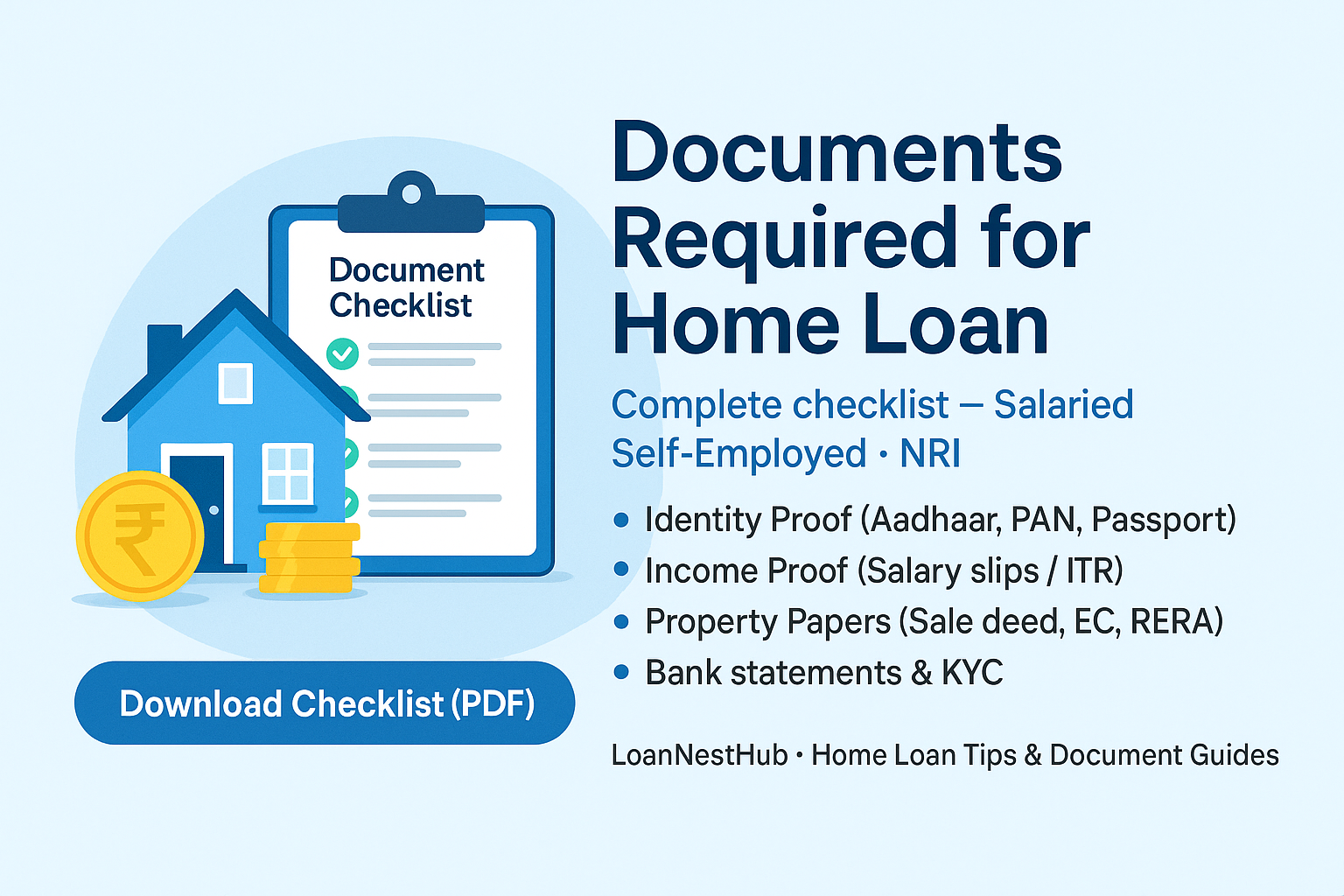
Typical documents reviewed:
- KYC
- Salary slips or ITRs
- Bank statements
- Form 16
- GST returns for self-employed
- Property-related documents
Use an EMI Calculator to Estimate & Optimise Eligibility
Borrowers can estimate eligibility using:
- Net income
- FOIR limits
- EMI affordability
The Home Loan EMI Calculator helps assess realistic loan amounts before approaching lenders
Frequently Asked Questions
1. How can I get a higher home loan amount?
Improve FOIR, increase down payment, strengthen CIBIL score, extend tenure, or add a co-applicant.
2. Does salary affect eligibility?
Yes. Lenders calculate repayment capacity directly from net monthly income.
3. Can self-employed applicants get high loan amounts?
Yes, provided financials show consistent business performance and tax compliance.
4. Does credit score affect loan amount or only interest rate?
It affects both. Better scores reduce spreads and increase sanctioned amount.
5. Should I apply to multiple banks at once?
No. Multiple inquiries can negatively impact your credit score.
Conclusion
Improving home loan eligibility requires understanding how lenders assess repayment capacity, managing existing liabilities, and presenting a stable credit and income profile. With proper preparation – including optimised FOIR, strong credit discipline, a higher down payment, and strategic tenure selection – borrowers can improve approval chances and secure better loan terms.
Before applying, use the EMI Calculator to estimate affordability and plan your approach effectively.