
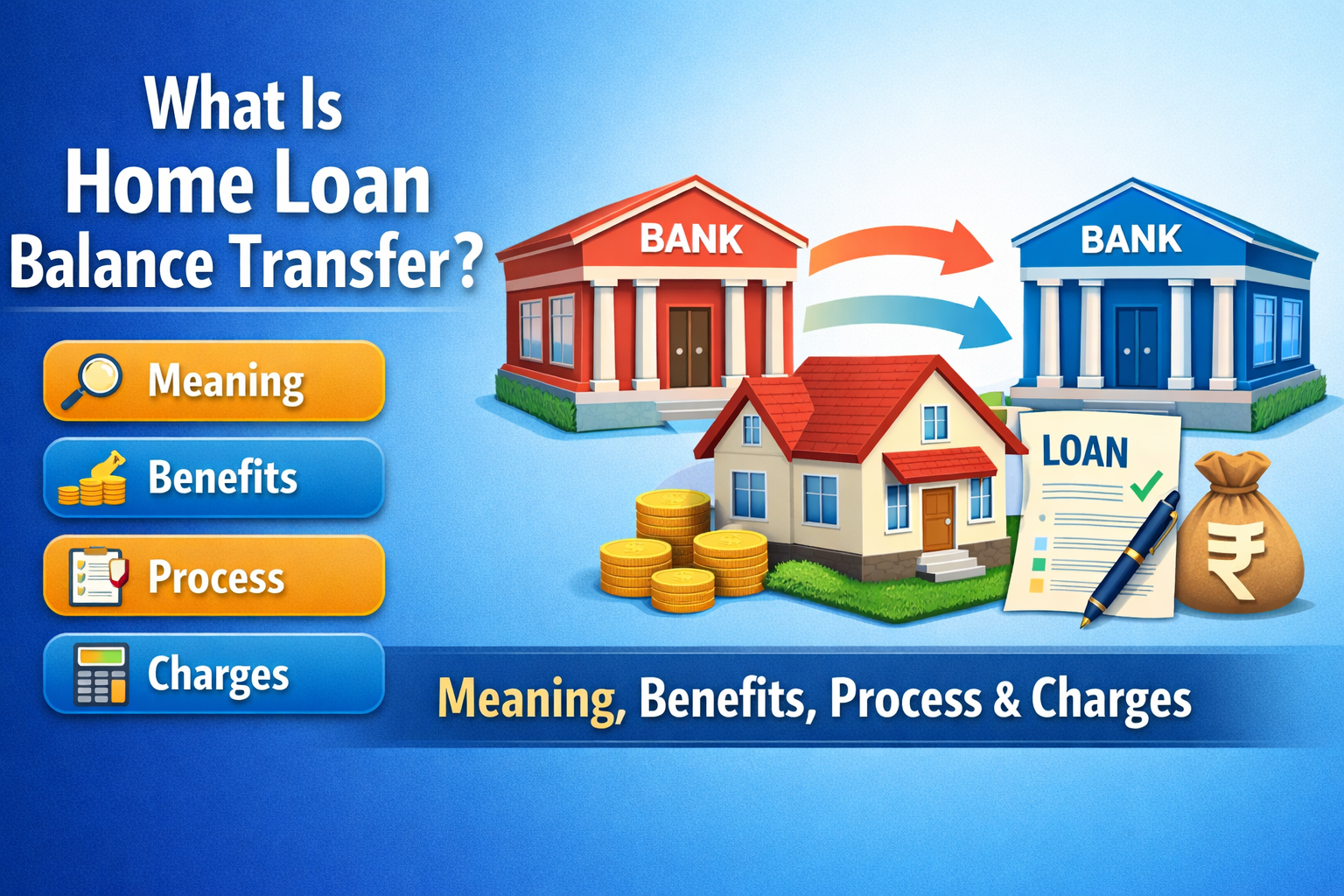
A home loan balance transfer is a smart financial option that allows borrowers to shift their existing home loan from one lender to another offering lower interest rates, better repayment flexibility, or improved loan features. By transferring the outstanding loan amount, you can reduce your monthly EMI, save significant interest over the loan tenure, and sometimes even access additional funds through a top-up loan.
At LoanNestHub, we help you understand whether a balance transfer actually saves money not just on EMI, but on the total cost of the loan.
Index
- What Is a Home Loan Balance Transfer?
- Why Do Borrowers Opt for a Home Loan Balance Transfer?
- When Is Home Loan Balance Transfer a Smart Decision?
- Fees and Charges in Home Loan Balance Transfer
- Benefits of Home Loan Balance Transfer
- Home Loan Balance Transfer Process
- Things to Check Before Transferring Your Home Loan
- Conclusion
What Is a Home Loan Balance Transfer?
A home loan balance transfer (also known as home loan refinancing) means moving the remaining loan balance from your current bank or NBFC to a new lender with better terms.
Here’s how it works:
- The new lender pays off your outstanding loan amount to the existing lender
- Your old loan gets closed
- A new home loan starts with revised interest rate, tenure, and conditions
This can lead to lower EMIs, reduced interest burden, or improved loan flexibility.
Why Do Borrowers Opt for a Home Loan Balance Transfer?
Most borrowers choose a home loan balance transfer for one or more of the following reasons:
- Lower home loan interest rate
- Reduced EMI or extended tenure
- Part-prepayment without heavy penalties
- Top-up loan availability
- Better digital servicing and transparency
Even a 0.50%-1% reduction in interest rate can save lakhs of rupees over a long tenure.
When Is Home Loan Balance Transfer a Smart Decision?
A balance transfer is beneficial only in specific situations. At LoanNestHub, we recommend considering it when:
1. Remaining Loan Tenure Is Long
In the early years of a home loan, EMIs mostly go toward interest. Transferring at this stage can significantly reduce the total interest paid.
2. Outstanding Loan Amount Is High
If a large portion of your principal is still unpaid, a lower interest rate can make a meaningful difference.
If only 5–10% of the loan remains, transfer costs may outweigh benefits.
3. Net Savings Are Clearly Positive
Never look only at interest rate. Consider:
- Processing fees
- Legal & valuation charges
- Foreclosure or prepayment costs
Proceed only if overall savings > transfer costs.
Fees and Charges in Home Loan Balance Transfer
Before transferring your home loan, be aware of the following costs:
Charges From Existing Lender
- Foreclosure or loan closure charges (if applicable)
Charges From New Lender
- Processing fees
- Legal and technical valuation fees
Non-Monetary Costs
- Documentation effort
- Time spent coordinating between lenders
👉 LoanNestHub Tip: Always use a Home Loan Balance Transfer Calculator to check real savings instead of relying on EMI reduction alone.
Benefits of Home Loan Balance Transfer
1. Lower Interest Rate
A reduced interest rate directly lowers your EMI and cuts down the total interest paid over the loan tenure.
2. EMI Reduction or Tenure Extension
Borrowers can choose to:
- Keep tenure same and reduce EMI, or
- Keep EMI similar and reduce tenure
3. Part-Prepayment Flexibility
Many lenders allow partial repayment without penalties, helping you:
- Reduce principal faster
- Save on interest
- Close the loan earlier
4. Top-Up Loan Option
A balance transfer may also allow you to take a top-up loan, useful for:
- Home renovation
- Education expenses
- Wedding costs
- Debt consolidation
Top-up loans usually have lower interest rates than personal loans.
5. Better Loan Features & Transparency
Switching lenders can give access to:
- Improved online loan tracking
- Clearer statements
- Faster customer support
Home Loan Balance Transfer Process
- Compare lenders for interest rates, fees, and features
- Check savings using a balance transfer calculator
- Negotiate with current lender for better terms
- Apply with new lender
- Get NOC from existing lender
- Property & loan documents transfer
- Old loan closure and new loan start
Most transfers today are digitally processed with minimal paperwork.
Things to Check Before Transferring Your Home Loan
- Effective interest rate (not just advertised rate)
- Total cost over remaining tenure
- Reset clauses in floating-rate loans
- Prepayment and foreclosure conditions
- Long-term affordability
Conclusion
A home loan balance transfer can be a powerful tool to reduce financial stress but only if done after proper analysis. Borrowers should avoid switching lenders just because of temporary offers or minor EMI reductions.
At LoanNestHub, we recommend focusing on long-term savings, transparency, and affordability before making the decision.
Use calculators, compare scenarios, and then choose what truly works for your financial health.
Frequently Asked Questions (FAQs)
Is a home loan balance transfer worth it?
Yes, if it results in lower total interest cost, better repayment flexibility, or improved loan features after accounting for all charges.
Does a home loan balance transfer affect credit score?
A small temporary dip may occur due to lender inquiries, but disciplined repayments usually help maintain or improve your credit score over time.