
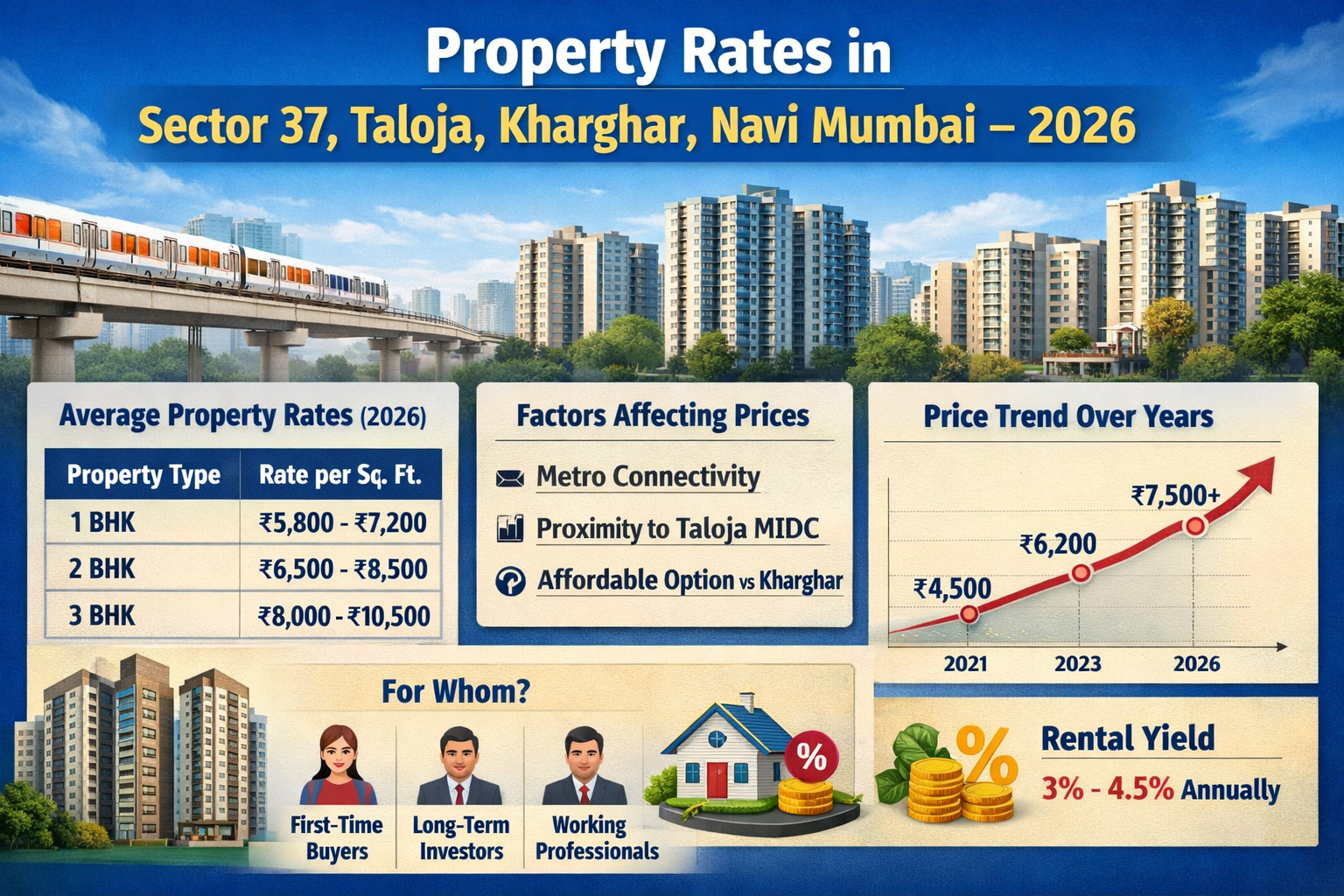
Property Rates in Sector 37, Taloja, Kharghar, Navi Mumbai is becoming a frequently searched topic among home buyers and small investors in Navi Mumbai. The reason is simple – this micro-location is still considered “affordable” compared to central Kharghar, yet it is developing fast.
People looking here usually face three questions:
- Are prices still reasonable in 2026?
- Is this area good for living or only for investment?
- Will rates grow further or stay stable?
Understanding current property rates, development status, and buyer suitability can help avoid emotional decisions and reduce financial risk.
Where is Sector 37, Taloja?
Sector 37 is located near the Taloja–Kharghar border in Navi Mumbai. It is often marketed as “Extended Kharghar” because it benefits from Kharghar’s infrastructure while offering lower entry prices.
Why This Area Gets Attention
- Close to Kharghar node
- Proximity to Taloja MIDC industrial area
- Connectivity to Sion–Panvel Highway
- Upcoming and expanding Navi Mumbai Metro connectivity
- Presence of budget and mid-segment housing projects
This combination attracts both salaried home buyers and rental investors.
Property Rates in Sector 37, Taloja, Kharghar – 2026
Property prices vary based on:
- Builder reputation
- Building age
- Flat size
- Floor level
- Amenities
- Proximity to main road or metro station
Average Property Rates (2026 Estimate)
| Property Type | Average Rate per Sq. Ft. | Typical Budget Range |
|---|---|---|
| 1 RK | ₹5,000 – ₹6,200 | ₹20 – ₹28 Lakhs |
| 1 BHK | ₹5,800 – ₹7,200 | ₹32 – ₹48 Lakhs |
| 2 BHK | ₹6,500 – ₹8,500 | ₹55 – ₹85 Lakhs |
| 3 BHK | ₹8,000 – ₹10,500 | ₹95 Lakhs – ₹1.35 Cr |
These are indicative mid-market figures, not fixed transaction prices.
What Drives Property Prices Here?
1. Infrastructure Development
Road widening, metro expansion, and new commercial pockets gradually push demand.
2. Industrial Employment
Taloja MIDC creates rental demand from working professionals.
3. Affordability Compared to Kharghar
Prices are usually 15–25% lower than prime Kharghar sectors.
4. New Housing Supply
Multiple under-construction and recently completed projects affect both price stability and negotiation scope.
Price Trend: Past to 2026
| Year | Approx Avg Rate per Sq. Ft. |
|---|---|
| 2021 | ₹4,200 – ₹5,000 |
| 2023 | ₹5,000 – ₹6,200 |
| 2025 | ₹5,800 – ₹7,500 |
| 2026 | ₹6,000 – ₹8,000 |
Observations
- Growth has been gradual, not explosive
- Demand is steady rather than speculative
- Appreciation is usually linked to infrastructure milestones
Rental Market Snapshot
Rental demand mainly comes from:
- MIDC employees
- IT and logistics staff
- Young couples and bachelors
Average Monthly Rent (2026)
| Property Type | Rent Range |
|---|---|
| 1 RK | ₹7,000 – ₹10,000 |
| 1 BHK | ₹10,000 – ₹15,000 |
| 2 BHK | ₹15,000 – ₹22,000 |
Rental Yield Estimate: 3–4.5% annually, depending on purchase price and furnishing.
Who is This Area Suitable For?
Suitable For
- First-time home buyers with limited budget
- Long-term investors seeking steady appreciation
- Working professionals near Taloja MIDC
- Buyers looking for larger carpet area at lower cost
May Not Suit
- Buyers expecting luxury amenities
- People needing immediate high resale profits
- Those dependent on premium schools and malls nearby
Cost Impact on Buyers
When buying property, the flat cost is not the only expense.
Additional Costs to Consider
- Stamp Duty & Registration (5–7%)
- GST (if under-construction)
- Maintenance deposits
- Parking charges
- Brokerage (if any)
- Society formation charges
Ignoring these can increase total spending by 8–12%.
Comparison: Sector 37 vs Prime Kharghar
| Factor | Sector 37 Taloja | Prime Kharghar |
|---|---|---|
| Price per Sq. Ft. | Lower | Higher |
| Infrastructure | Developing | Established |
| Amenities | Basic to Mid | Mid to Premium |
| Rental Demand | Moderate | Strong |
| Appreciation Speed | Gradual | Faster historically |
| Crowd Density | Medium | High |
This shows Sector 37 is more of a value buy, while central Kharghar is a stability buy.
Pros and Cons
Pros
- Lower entry price
- Growing connectivity
- Better carpet area for budget
- Steady rental demand
- Scope for negotiation
Cons
- Limited luxury projects
- Infrastructure still improving
- Appreciation slower than prime nodes
- Traffic congestion during peak hours
Practical Tools Buyers Should Use
1. EMI Calculators
Helps understand monthly affordability before finalising a loan.
2. Carpet Area vs Built-Up Area Check
Avoid confusion in project brochures.
3. RERA Project Verification
Ensures legal compliance and delivery timelines.
4. Rental Yield Estimator
Useful for investment decisions rather than emotional buying.
Conclusion
Property Rates in Sector 37, Taloja, Kharghar, Navi Mumbai – 2026 reflect a developing yet affordable housing pocket. Prices are neither extremely low nor overheated. This balance attracts practical buyers rather than speculators.
The area suits:
- Budget-conscious families
- First-time buyers
- Long-term investors willing to wait 5–7 years
It may not suit short-term flippers or luxury seekers. Decisions here should be based on affordability, commuting needs, and long-term stability rather than quick appreciation expectations.
FAQs – Property Rates in Sector 37, Taloja, Kharghar – 2026
1. What is the average property rate in Sector 37 Taloja in 2026?
Average mid-segment rates range between ₹6,000 and ₹8,000 per sq. ft., depending on project and amenities.
2. Is Sector 37 Taloja good for investment?
It is considered suitable for long-term investment rather than short-term gains due to gradual infrastructure development.
3. What is the price of a 1 BHK flat here in 2026?
Typical 1 BHK prices fall between ₹32 and ₹48 lakhs, depending on size and builder quality.
4. Are rental returns good in this area?
Rental yields usually range from 3% to 4.5% annually, which is moderate compared to other Navi Mumbai nodes.
5. How does Sector 37 compare with central Kharghar?
Sector 37 is more affordable but has fewer premium amenities. Central Kharghar offers better infrastructure but at higher prices.