
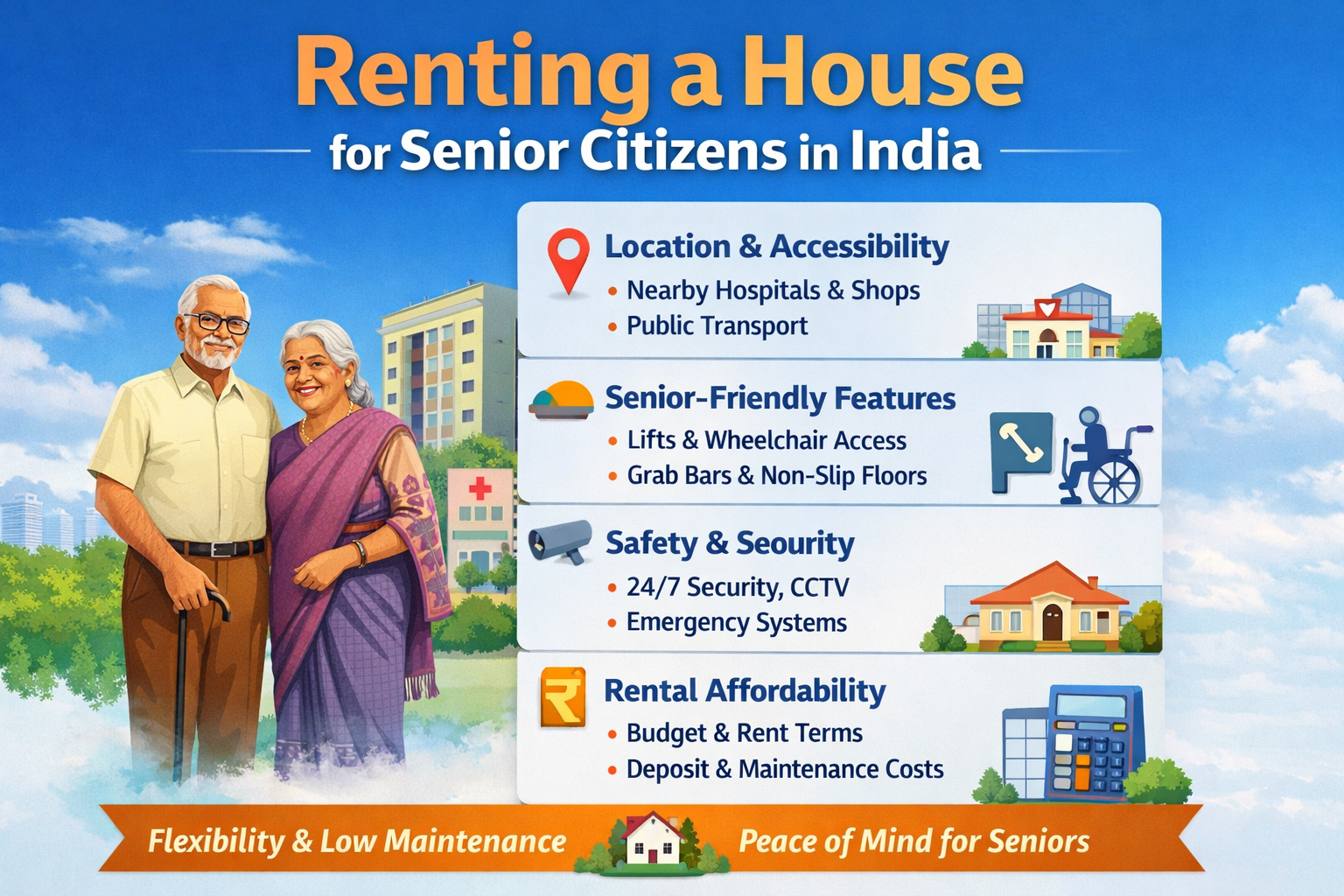
India’s real estate market is witnessing a steady rise in senior living and retirement housing, but ownership is not the only option for elderly citizens. Many seniors today prefer renting a house instead of buying, mainly due to flexibility, lower financial pressure, and reduced maintenance responsibilities.
At a later stage of life, housing decisions are not only financial – they are also about comfort, accessibility, safety, and proximity to healthcare. A house suitable for a young working professional may not be ideal for a senior citizen. Therefore, renting requires careful evaluation of multiple factors beyond just monthly rent.
This guide explains what senior citizens should check, why it matters, and how to make a safe rental decision in India.
Why Renting Is Becoming Popular Among Senior Citizens
Several social and financial changes are influencing this shift:
- Children moving to different cities or countries
- Rising property prices in urban areas
- Increasing healthcare needs
- Desire for independent yet low-liability living
- Need for flexibility to relocate near family
Renting allows seniors to adapt to life changes without long-term financial commitments.
Location and Neighbourhood Facilities
Why Location Matters More for Seniors
For senior citizens, distance and accessibility directly impact daily comfort. Long travel for groceries, hospitals, or banking can become physically exhausting and financially costly.
Key Neighbourhood Factors to Check
- Hospitals and Clinics Nearby – within 2–5 km ideally
- Pharmacies and Diagnostic Centres
- Grocery Stores and Daily Essentials
- Banks and ATMs
- Public Transport Availability
- Parks or Walking Areas
- Low Traffic and Noise Levels
Social Environment Consideration
Apart from infrastructure, social comfort is equally important. Seniors often feel safer and happier when living:
- Close to children or relatives
- In communities with similar age groups
- In culturally familiar localities
- Near friends or known neighbours
A good location reduces both emotional stress and emergency response time.
Senior-Friendly Property Features
Not all houses are designed keeping elderly needs in mind. Even a well-maintained apartment can become risky if accessibility features are missing.
Essential Physical Features
| Feature | Why It Matters |
|---|---|
| Lift/Elevator | Avoids stair climbing risks |
| Power Backup | Important during medical emergencies |
| Wheelchair Access | Ensures mobility support |
| Wide Doorways | Easier movement with walkers |
| Grab Bars in Bathrooms | Prevents slipping accidents |
| Non-Slip Flooring | Reduces fall risk |
| Adequate Lighting | Improves visibility and safety |
Additional Comfort Features
- Emergency call buttons
- Intercom or video doorbell
- Senior citizen clubs
- Yoga or wellness rooms
- Walking tracks
- Community halls for social interaction
If a dedicated senior living project is unavailable, seniors should ensure at least the basic safety and accessibility features exist in the rented property.
Safety and Security Features
Security is not just about theft prevention. For seniors, it is about rapid emergency response and daily peace of mind.
Important Safety Measures
- 24/7 Security Guards
- CCTV Surveillance
- Gated Community Entry
- Video Doorbells
- Fire Safety Systems
- Advanced Door Locks
- Emergency Alarm Systems
Comfort-Linked Security Facilities
- Housekeeping services
- Regular maintenance staff
- Good lighting in corridors
- Parking accessibility
- Open green spaces
A safe environment improves mental wellbeing and confidence in independent living.
Rental Affordability and Financial Planning
Renting may appear cheaper than buying, but seniors often live on pension, savings, or fixed income, which makes budgeting crucial.
Factors That Affect Rental Affordability
- Monthly pension or income
- Household expenses
- Medical costs
- Local rental trends
- Property size
- Maintenance charges
- Security deposit requirements
Financial Discussions with Landlords
Before signing an agreement, seniors should clarify:
- Annual rent increase percentage
- Security deposit refund terms
- Responsibility for repairs
- Maintenance charges
- Lock-in period
- Flexibility for early exit
Practical Budget Tip
Many financial advisors suggest that rent should not exceed 25–30% of monthly income for retirees. This ensures sufficient funds remain for healthcare and emergencies.
When Should Seniors Choose Renting Over Buying?
Renting is not always better, but it becomes practical under certain conditions.
1. Flexibility Needs
- Moving closer to children
- Relocating for medical treatment
- Downsizing living space
- Trying different cities
2. Reduced Maintenance Responsibility
Homeownership involves:
- Structural repairs
- Appliance replacement
- Plumbing and electrical maintenance
- Society charges
Renting shifts most major repair responsibilities to the landlord.
3. Financial Liquidity
Buying property locks a large portion of savings. Renting allows seniors to:
- Keep emergency funds available
- Invest savings for income
- Manage healthcare expenses
- Avoid loan EMIs at older age
4. Loan Accessibility Challenges
Banks often have stricter age limits for home loans. Seniors may face:
- Higher interest rates
- Shorter loan tenure
- Lower eligibility
Renting eliminates these hurdles.
Renting vs Buying for Senior Citizens
| Factor | Renting | Buying |
|---|---|---|
| Flexibility | High | Low |
| Maintenance Responsibility | Low | High |
| Financial Commitment | Moderate | Very High |
| Liquidity | High | Low |
| Long-Term Asset Creation | No | Yes |
| Loan Requirement | Not Needed | Often Required |
| Relocation Ease | Easy | Difficult |
There is no universal right choice – it depends on personal finances, health conditions, and family location.
Practical Tools and Aids for Decision-Making
Senior citizens or their family members can use simple tools to make better rental decisions:
- Rent Affordability Calculators – estimate safe rent range
- Location Comparison Tools – compare infrastructure
- Online Rental Platforms – check price trends
- Medical Facility Mapping Apps – assess proximity
- Budget Planners – track monthly expenses
These tools help remove guesswork and reduce emotional decision-making.
Pros, Cons and Limitations of Renting for Seniors
Advantages
- Flexibility to move
- Lower financial risk
- No long-term debt
- Reduced maintenance stress
- Better cash flow management
Limitations
- No property ownership asset
- Possible rent increases
- Dependency on landlord policies
- Limited customization freedom
- Uncertainty of long-term stability
Understanding these trade-offs helps seniors avoid unrealistic expectations.
Conclusion
For senior citizens in India, renting a house is often a practical and financially sensible option, especially when flexibility, medical accessibility, and reduced liabilities are priorities. However, the decision should not be rushed.
The right rental choice depends on:
- Health and mobility requirements
- Monthly income stability
- Proximity to family and healthcare
- Safety infrastructure
- Accessibility features
A well-chosen rental home can provide comfort, independence, and peace of mind without the financial burden of ownership. Seniors and their families should treat this decision as a lifestyle and financial planning exercise, not just a property search.
Frequently Asked Questions (FAQs)
1. What type of rental property is best for senior citizens?
A gated apartment or a senior-friendly community with lifts, security, nearby hospitals, and non-slip flooring is generally ideal.
2. Is renting cheaper than buying for retirees?
In many cases, yes. Renting avoids large upfront costs, loan interest, and maintenance expenses, making it financially lighter for fixed-income retirees.
3. Should senior citizens sign long-term rental agreements?
Long-term agreements can reduce yearly rent hikes but should include exit flexibility in case of medical or family relocation needs.
4. Are senior living rental projects available in India?
Yes, several cities like Bengaluru, Chennai, Pune, and Hyderabad have dedicated senior living rental communities with medical and recreational facilities.
5. How much rent is affordable for retired seniors?
Financial planners often suggest keeping rent within 25–30% of monthly income to maintain financial stability.
6. What safety features are most important for elderly renters?
24/7 security, CCTV, emergency alarms, fire safety systems, and well-lit common areas are essential.
7. Can seniors negotiate rent with landlords?
Yes. Seniors can negotiate rent, maintenance charges, and security deposits, especially for long-term occupancy.
8. Is ground-floor living better for senior citizens?
Ground floors reduce stair risk, but buildings with reliable lifts and power backup can also be safe options.
9. What hidden costs should seniors check before renting?
Maintenance charges, parking fees, electricity backup costs, and brokerage fees should be clarified beforehand.
10. Should seniors involve family members in rental decisions?
Yes. Family involvement helps in evaluating safety, medical accessibility, and legal agreement terms more effectively.